🎭 Gitagobinda
Jayadeva's immortal creation - The divine love story of Radha-Krishna
About Gitagobinda
Gitagobinda, composed in the 12th century CE by the Odishan poet Jayadeb, is an immortal Kavya describing the union and separation of Radha-Krishna.
It consists of 72 slokas distributed unevenly in 12 sargas and 24 gitas. Gitas 1 and 10 have 11 and five stanzas respectively. All other gitas have 8 stanzas - hence called astapadis.
The language of Gitagovinda is charmingly lyrical conveying the deep thoughts of the kavya. This gives it an important place in the fields of music, dance and literature. Traditionally, Gitagobinda is sung in the temple of Lord Jagannath during the evening worship and on special occasions like the Badasinhar attiring of Jagannath. Devadasis of earlier era used to sing Gitagobinda and dance to its tunes in front of the Lord.
Lord Vishnu's dasavatar (ten incarnations) finds a place in many Indian classics. But its presentation in Gitagobinda is the most popular, so much so that common people are found to be humming it. The original Sanskrit slokas of Gitagobinda has been translated into many languages since its composition. The early Odia rendering by Dharanidhar Das (Mishra) in the 18th century CE is among the most popular.
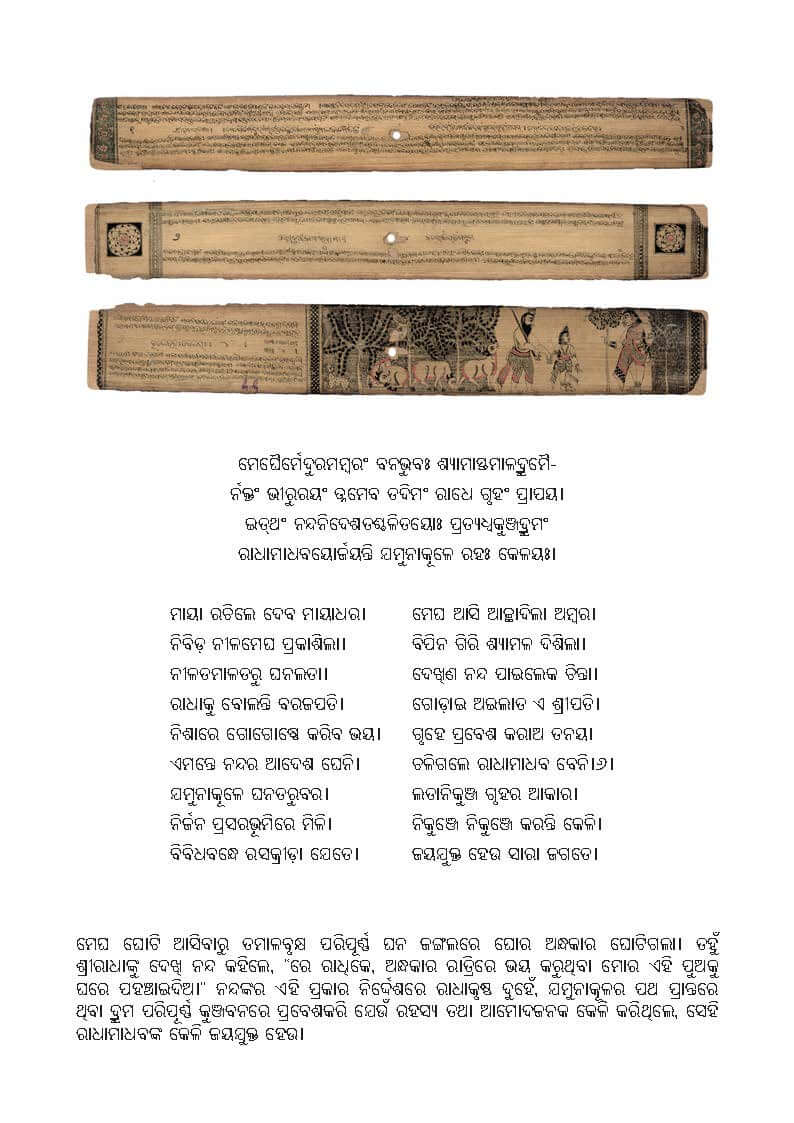
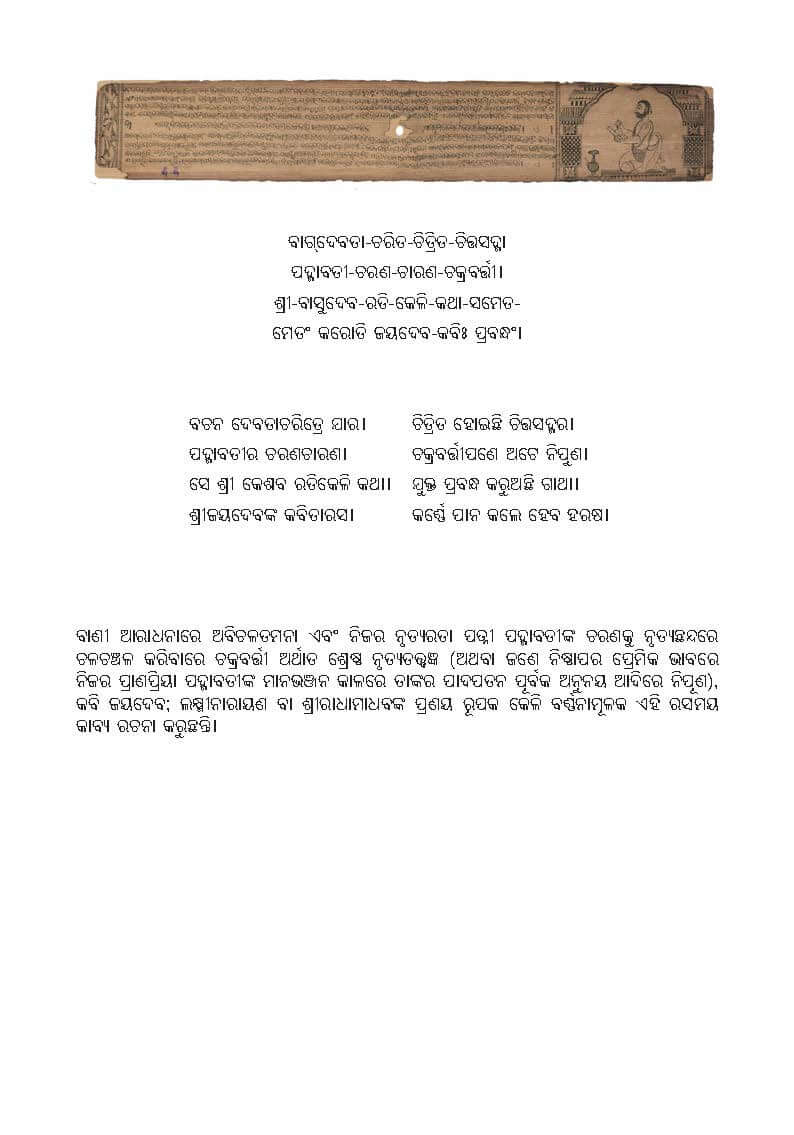
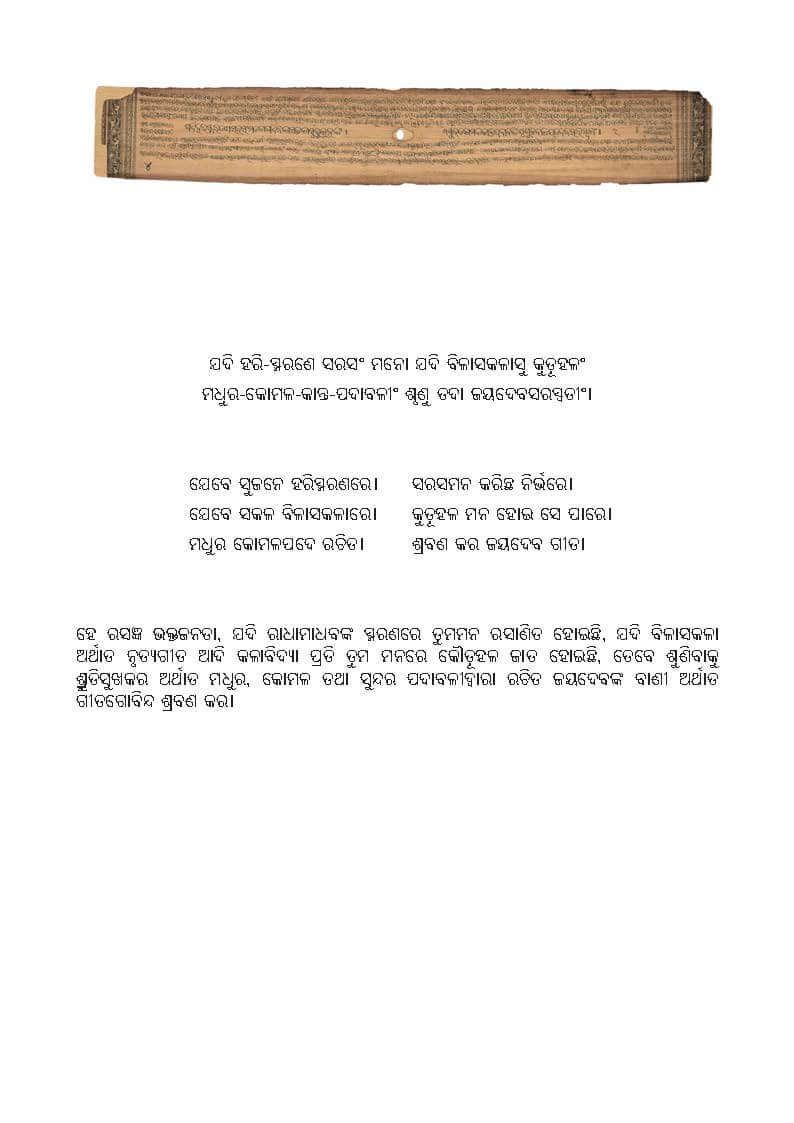
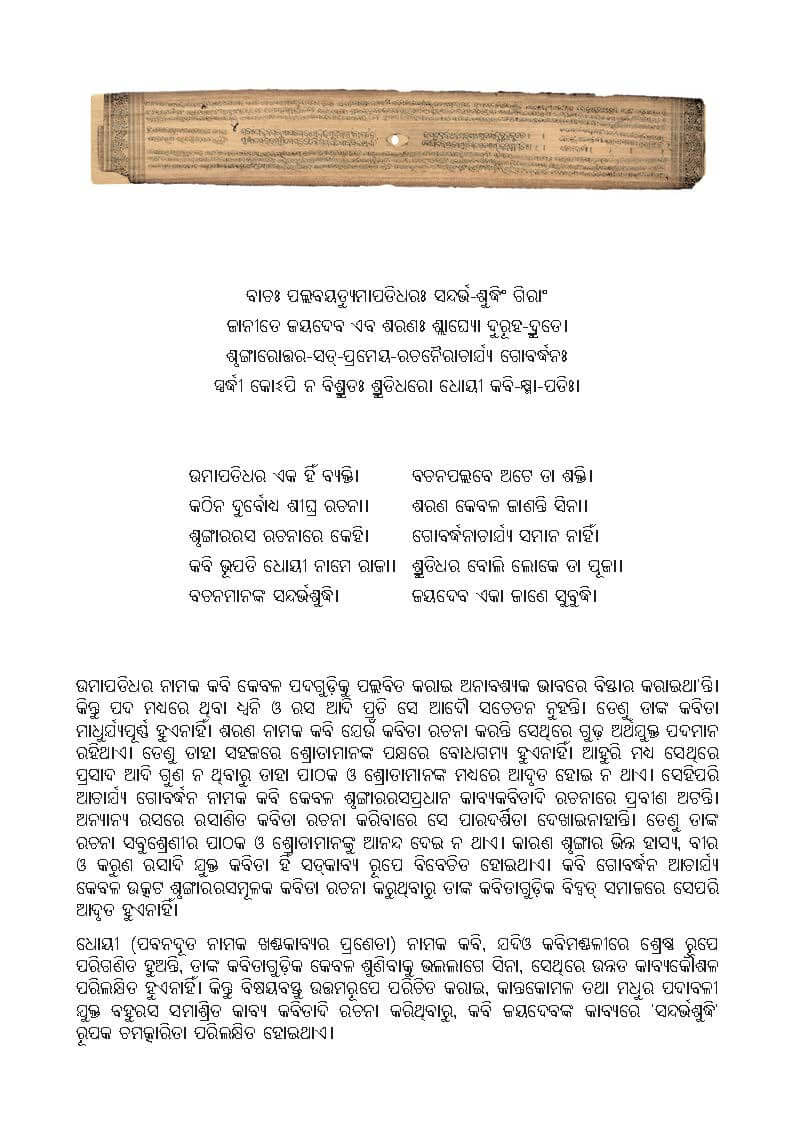
Gitagobinda is presented here as a composite of the original Sanskrit slokas, Dharanidhar's Odia verses, Nilamani Mishra's Odia prose and English prose by the Odisha State Museum along with thumbnails of the palm leaf folios.
Features of the Poetry
- ✓12 cantos and 24 songs
- ✓72 verses in total
- ✓Eight-verse songs called ashtapadi
- ✓Traditionally recited in Jagannath Temple
- ✓With Odia and English translations
Palm-leaf Manuscript & Illustrations
Palm-leaf manuscript images sourced from Odisha Virtual Academy (ova.gov.in)








Famous Verses
"If the mind delights in remembering Hari, if it finds joy in divine play"
- Opening verse of Gitagobinda
View / Download Gitagobinda PDFs
The Gitagobinda composite given here is quite large (201 pages) - therefore it has been presented in six parts for easier viewing. Click a part below to read it right here.